


Short Answer: Copper infusion is a real, well-documented textile manufacturing process with decades of scientific and industrial history.
There are several distinct methods for introducing copper into fabric, including surface spraying, weaving copper-containing yarns, and bath immersion, and they are not equivalent. Method matters: it determines how deeply the copper is integrated into the fiber, how long it lasts through washing, and whether the underlying fabric retains its natural properties.
Copper North uses bath immersion, which allows copper ions to bond throughout the fiber matrix of natural silk and is the method best supported by durability research for natural fibers.
Last updated: May 2026 | Reading time: ~11 minutes
This article cites peer-reviewed research published in indexed scientific and medical journals, as well as publicly available certification documentation. Where information is proprietary or subject to supplier confidentiality agreements, we say so explicitly.
Why the process behind copper infusion matters
If you have looked into copper-infused textiles, you have probably encountered a wide range of claims. Some products use vague marketing language. Others lean heavily on the word "infused" without explaining what that means in practice. A few go the other direction and describe their process in impenetrable technical detail.
The reason the process matters is practical: not all copper infusion methods produce the same result. A copper coating applied to the surface of a fabric after manufacturing behaves differently from copper that has been integrated into fiber at the molecular level. The former can wash off. The latter is documented in peer-reviewed literature to remain effective through dozens of wash cycles (1).
This article explains the main methods for introducing copper into textiles, how they compare in terms of durability and function, what Copper North uses and why, and how our finished fabric is independently verified. If you have arrived here wondering whether copper infused fabric is marketing or science, this is the honest, detailed answer.
A brief history: Copper in textiles is not new
Before getting into manufacturing methods, it is worth establishing that copper-infused textiles are not a recent wellness trend. The antimicrobial properties of copper have been recognized for thousands of years - copper was used in ancient Egypt to sterilize wounds and purify water - and the application of copper to medical and industrial textiles has a documented history spanning decades.
The comprehensive summary of copper-infused textiles as a durable, biocidal platform was published in the early 2000s by textile engineer Jeffrey Gabbay and microbiologist Dr. Gadi Borkow, whose research was published in the FASEB Journal (Federation of American Societies for Experimental Biology) in 2004 and in the Journal of Industrial Textiles in 2006 (2,3). Their work established that copper oxide could be permanently impregnated into textile fibers, and that the resulting fabrics retained their antimicrobial properties through extensive washing.
Copper-infused textiles have since been used in hospital linens, wound dressings, surgical garments, antimicrobial socks, and, as the clinical evidence base grew, consumer bedding and skincare textiles. The scientific literature on copper in textiles is substantial, peer-reviewed, and spread across materials science, dermatology, and microbiology journals.
The four main methods for infusing copper into fabric
There is no single "copper infusion" method. The textile industry uses several distinct ways of adding copper to fabric, and manufacturers sometimes use the words "infused," "coated," "embedded," and "impregnated" interchangeably, which can obscure meaningful differences. Here is an honest account of each approach.
Method 1: Surface spray or topical coating
How it works: A copper solution, typically containing copper oxide nanoparticles or copper ions in suspension, is sprayed onto the surface of a finished fabric, or the fabric is dipped briefly in a copper solution and dried. The copper adheres to the outer surface of the fibers rather than penetrating into the fiber structure.
Durability: This is the least durable approach for textiles. This process was designed for infrequently washed surfaces (4) or for telecommunication hardware manufacturing (5). When applied to fabric, surface coatings are vulnerable to washing because the copper is not chemically bonded to the fiber; it is sitting on top of it. Research on wash durability across antibacterial textile coatings consistently shows that surface-applied agents can lose significant efficacy after relatively few wash cycles, depending on the strength of adhesion between the copper compound and the fiber surface (6). Some surface-spray products require periodic reapplication to maintain effectiveness.
Common use case: Lower-cost consumer products where manufacturing speed and cost are prioritized over long-term performance. Also used in products where the copper benefit is intended to be temporary or where the product is not meant to be regularly washed..
For skin contact products like pillowcases and eye masks: A surface coating that degrades with washing is a particular concern, because the skin contact benefit depends on copper being present at the fiber surface consistently, night after night.
Method 2: Copper-containing yarn woven or knitted into fabric
How it works: Copper is incorporated into synthetic yarn, typically polyester or nylon, during the fiber extrusion process, before weaving or knitting. Copper oxide powder may be added to the polymer master batch at the manufacturing stage, so the copper is distributed throughout the cross-section of each synthetic fiber rather than applied to the surface (7). The resulting copper-bearing fibers are then woven or blended with other yarns to produce fabric.
Durability: This is a highly durable method for synthetic fibers. The landmark research by Gabbay and Borkow demonstrated that the biocidal properties of fabrics manufactured this way were "permanent, not affected by extreme washing conditions” (8).
The significant limitation: Synthetic-only composition: This method works well for polyester, nylon, polypropylene, and other synthetic polymers. It is specifically designed for synthetic fiber extrusion, because the copper oxide is added to the molten polymer before the fiber is extruded. Natural fibers like silk and cotton are not formed through polymer extrusion; they are grown or produced biologically. As such, copper-containing yarn is not a copper infusion method that can be applied to pure fiber products.
This is a key point for understanding the market. Many copper pillowcases manufactured using this method are copper-polyester blends, not pure silk, because the copper-bearing yarn technology was designed for synthetic fibers. The resulting fabric may have durable copper properties, but the underlying polyester does not have the friction-reduction, moisture-moderation, and temperature-regulation properties of mulberry silk.
Common use case: Medical textiles, athletic wear, protective garments, and copper bedding that uses synthetic or blended fabrics.
Method 3: Electroless plating
How it works: Fibers are treated in a multi-step chemical process that deposits a metallic copper layer onto the surface of the fiber through a chemical reduction reaction rather than through an electrical current (hence "electroless"). The Borkow and Gabbay research described an electroless plating process for cotton fibers involving sequential soaking in tin chloride, palladium chloride, and a copper sulfate solution (9). The result is a thin, continuous copper coating chemically adhered to the fiber surface.
Durability: More durable than spray coating because the deposition process creates a stronger bond with the fiber, but typically less durable than methods that integrate copper throughout the fiber cross-section. Research on copper-plated cotton fibers showed minor loss of copper oxide without loss of biocidal efficacy after extreme washing (10), suggesting that the functional copper level is maintained even if the total copper content decreases slightly over time.
Common use case: Primarily used in medical and technical textile applications. Less common in consumer bedding because the multi-step chemical process is more complex to scale while maintaining fabric texture, softness, and color.
Method 4: Bath immersion
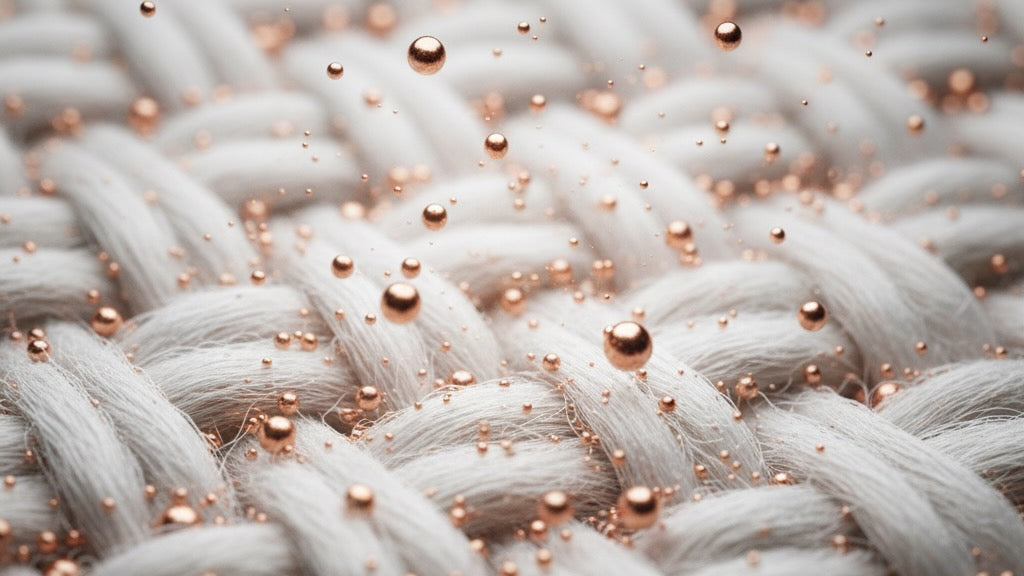
How it works: Finished fabric or fiber is immersed in a solution containing copper ions, typically a copper salt dissolved in water, often with additional agents and steps to control pH, promote uptake, and fix the copper to the fiber. A 2022 review published in Polymers about copper-infused textiles used against COVID-19 details a bath + roller + dryer process that is repeated across different solutions, followed by a curing process where copper ions bond to the fiber matrix. This bath immersion approach led to durable copper concentration across washes and measurably reduced SARS-CoV-2 (COVID-19) and Escherichia coli bacteria (11).
For natural fibers, which have protein (in the case of silk) or cellulose (in the case of cotton) molecular structures, copper ions can form stable bonds via bath immersion with specific amino acid groups or hydroxyl groups within the fiber. A 2024 study published in Frontiers in Chemistry demonstrated this mechanism in detail for cotton, showing that immersion of cotton in a copper ion solution enabled "stable coordination between the copper ions and cellulose hydroxyl groups, forming stable Cu-O bonds throughout the fiber matrix," with the resulting fabric exhibiting "potent, broad-spectrum antibacterial activity” (12).
Durability: Bath immersion, when properly controlled, produces copper integration that is chemically bonded to the fiber rather than sitting on its surface, giving it meaningful durability through repeated washing. The depth and stability of copper uptake depend on process parameters including solution concentration, temperature, time, and the specific chemistry used to bond the copper to the fiber. These variables are typically proprietary, and refined by manufacturers.
Why it works for natural fibers: Unlike the master batch process used for synthetic fiber extrusion, bath immersion works with finished fabric and can be applied to natural fibers like silk and cotton without altering their fundamental structure. The silk fiber's natural protein structure, which is rich in amino acids with groups capable of coordinating metal ions, provides binding sites for copper throughout the fiber, not just at the surface.
Common use case: Bath immersion copper infusion is applied across both synthetic and natural textiles. It is particularly relevant for natural fiber applications where other methods are either unsuitable (master batch extrusion) or primarily surface-level (spray coating).
To understand what copper does once it is in the fabric and in contact with your skin, see our companion articles that address Does a copper pillowcase actually work? and Copper and Anti-Aging: How This Mineral Supports Skin Rejuvenation
How Copper North’s copper infused silk is made
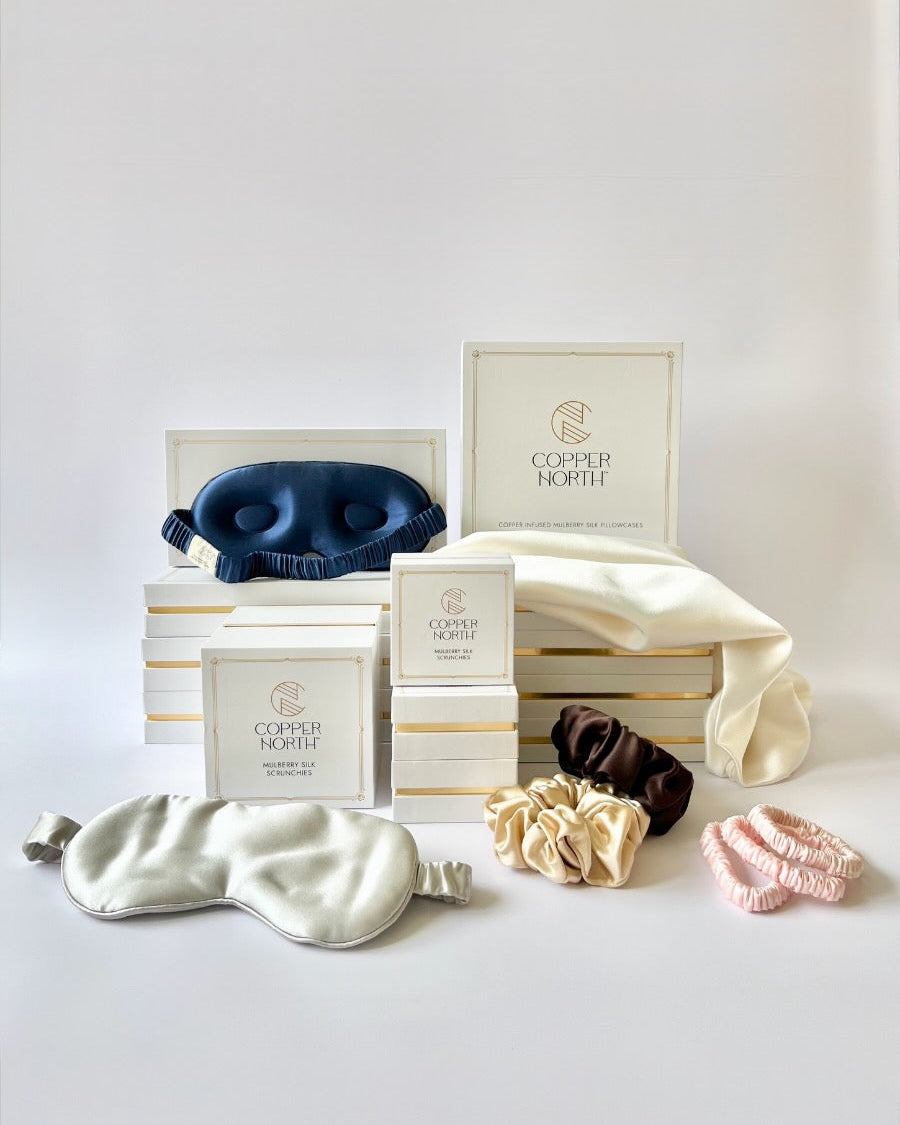
Copper North uses bath immersion.
We chose this method for two specific reasons: it is compatible with natural fibers like silk and cotton without compromising their properties, and it produces copper integration that is distributed throughout the fiber rather than sitting on the surface.
Beyond that, because of proprietary methodology, we do not describe specific process parameters, such as solution chemistry, concentration, temperature, or time, because those details are covered by confidentiality agreements with our suppliers that we respect. This is standard in the textile manufacturing industry, where production processes represent significant investment in research and refinement.
What we can tell you is the result: the copper content of our finished fabrics is validated with independent European laboratories for every production batch we sell. That verification is described in the next section.
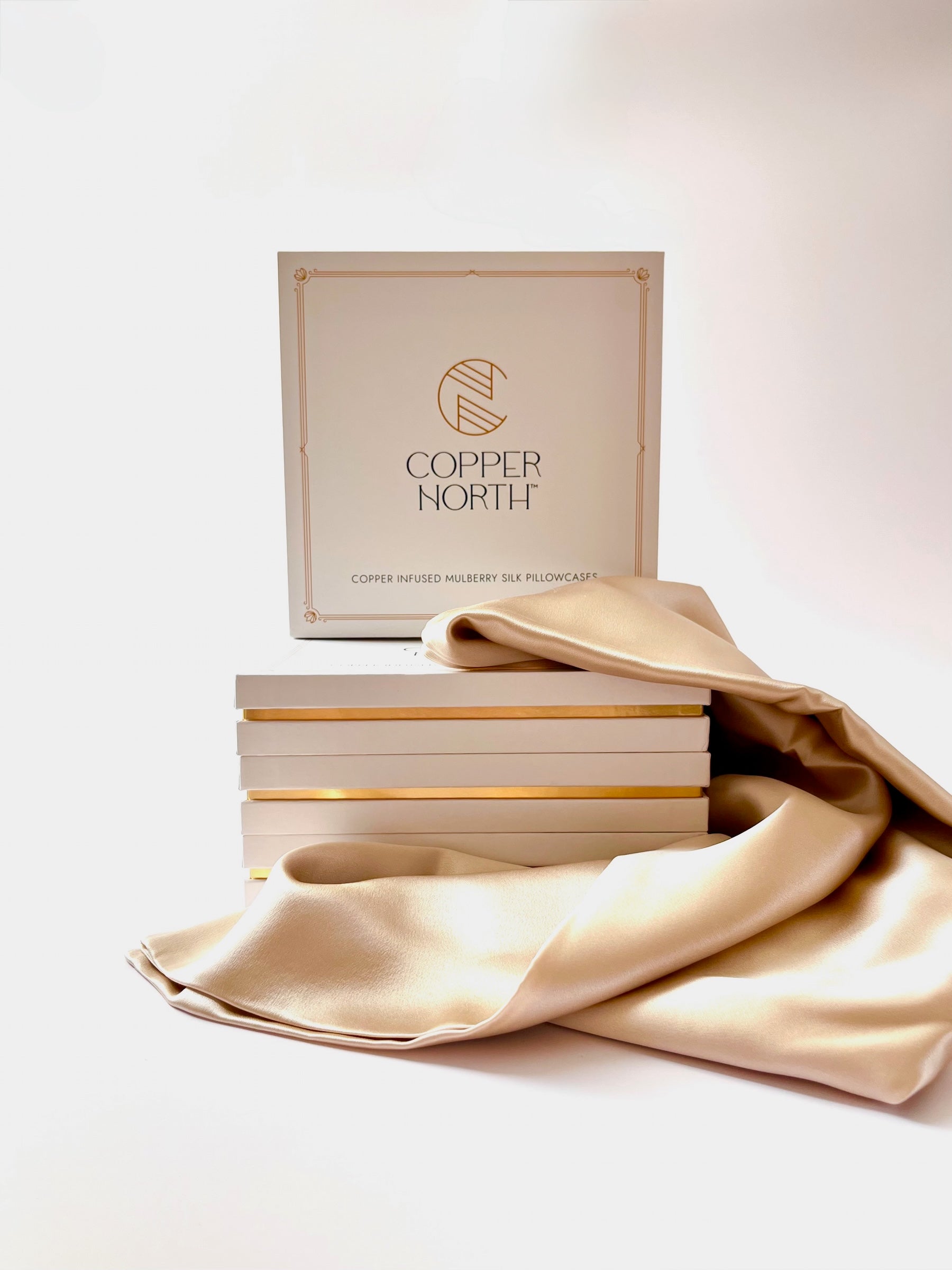
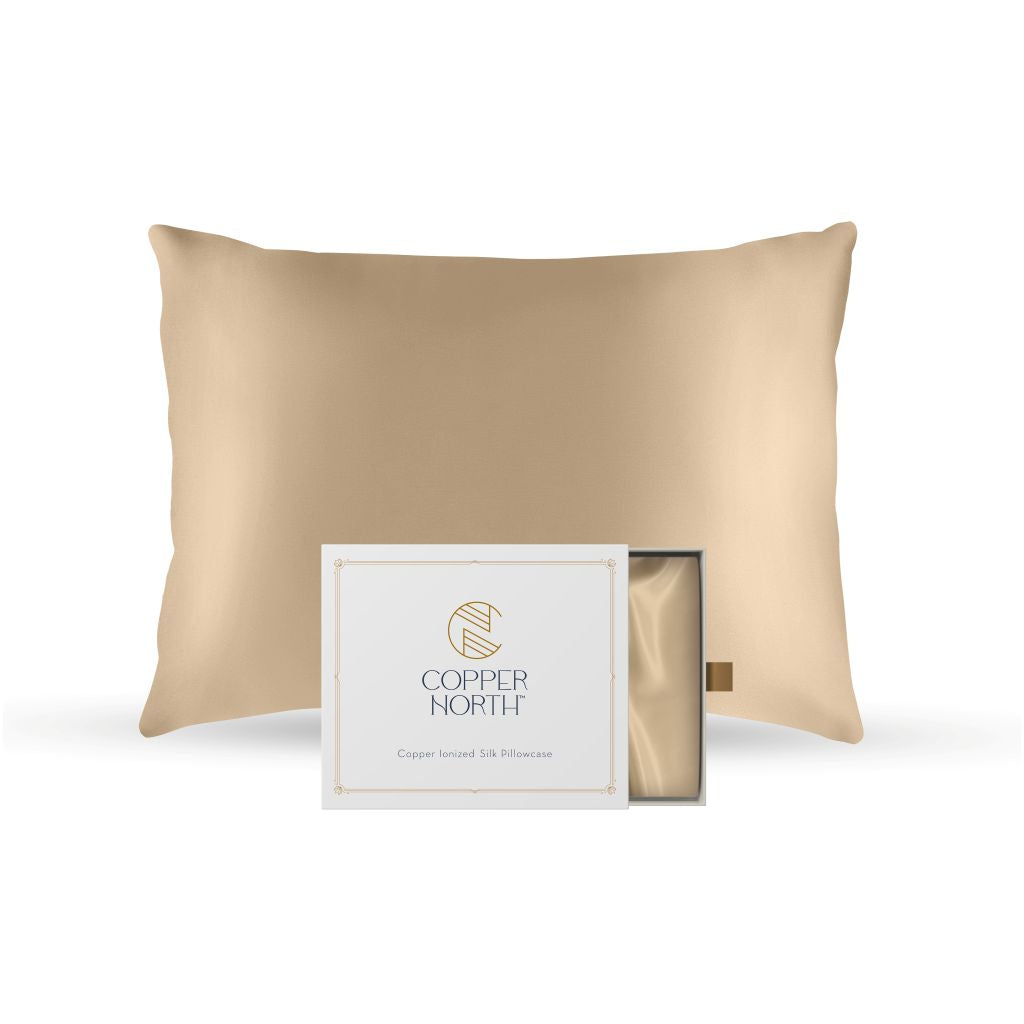
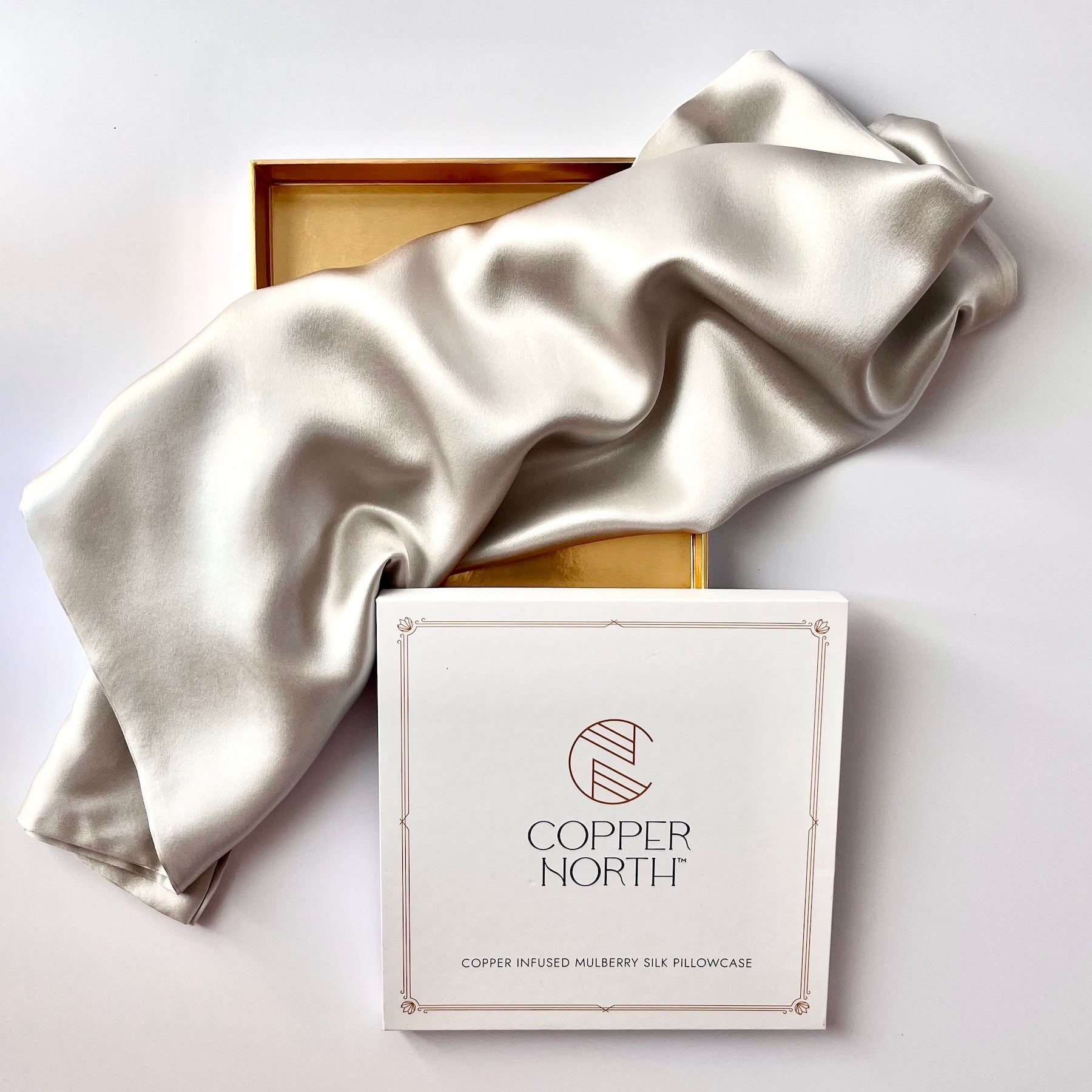
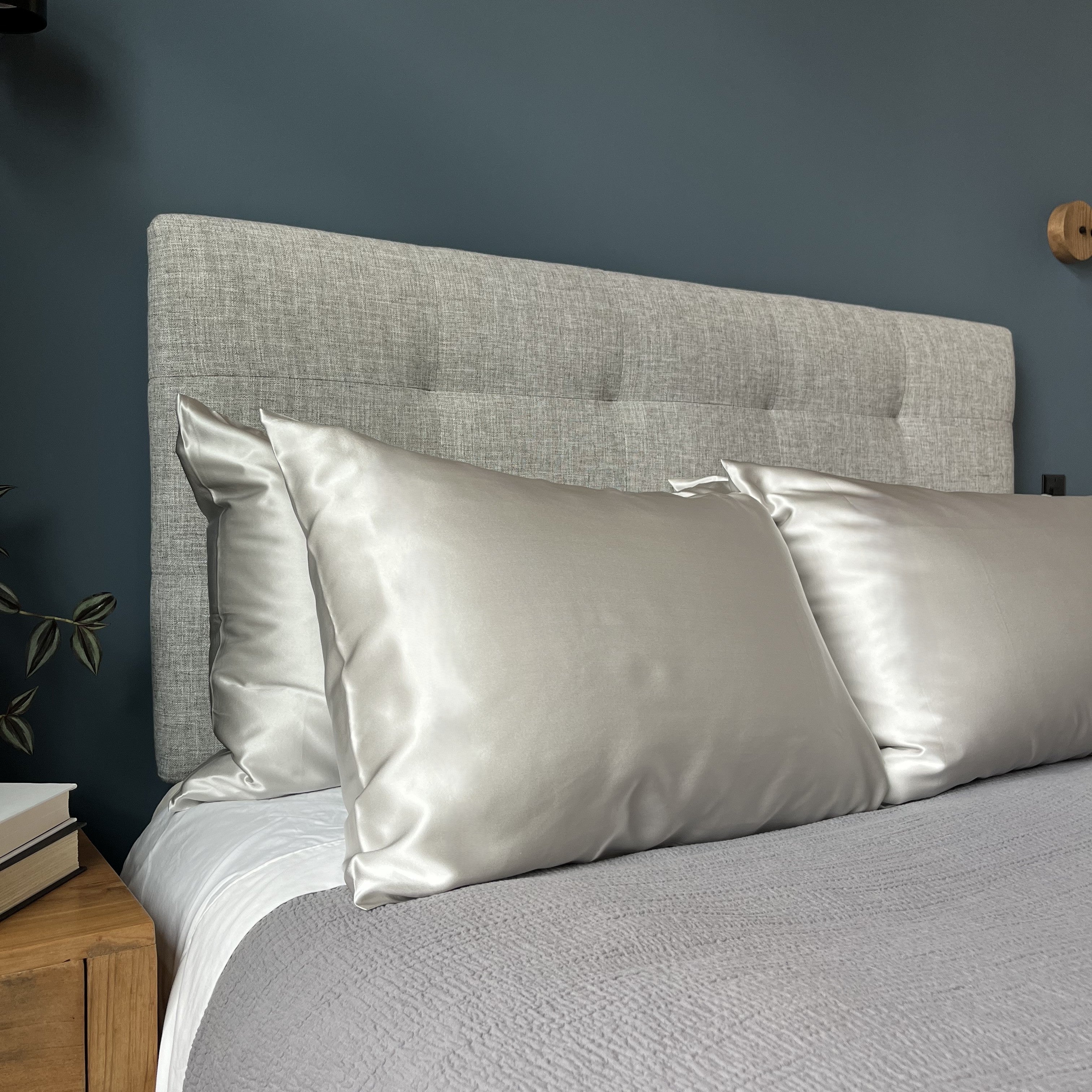
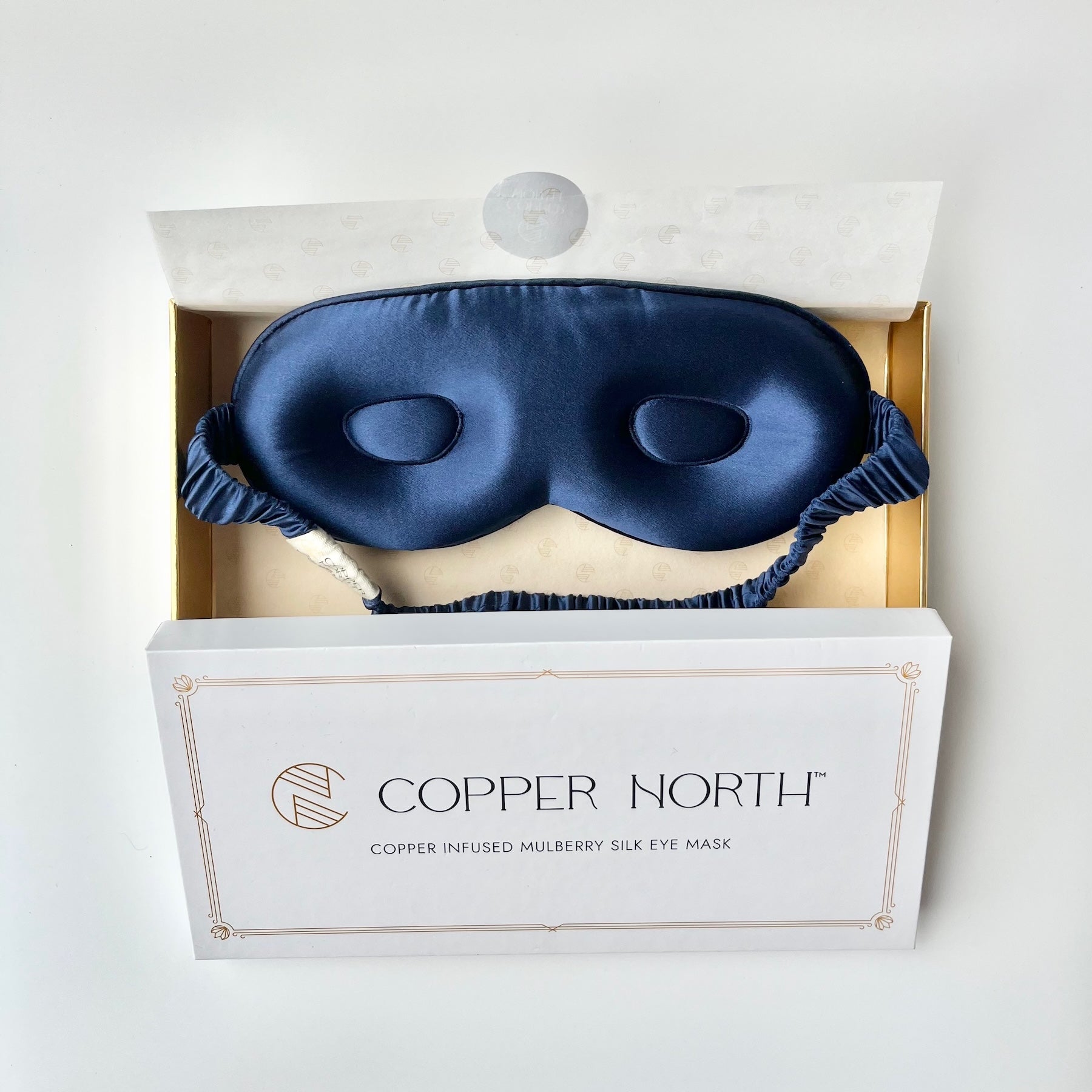
One note on positioning: Bath immersion copper infusion is an addition to natural silk, not a replacement for it. Copper North pillowcases, eye masks, and related products are first and foremost natural silk products, with all the friction-reducing, moisture-moderating, and hypoallergenic properties that 22-momme mulberry silk provides on its own. The copper infusion is a meaningful extra layer, not the whole story. If you are choosing between a copper-infused silk product and a non-copper silk product from a quality-conscious brand, both can be good choices. The copper adds documented benefits; it does not make silk silk.
How Copper North approaches quality verification
Claiming that a fabric is copper-infused is straightforward. Verifying it independently is a different standard, and one we hold ourselves to.
Copper North's finished fabrics are tested by accredited, independent European laboratories before products go to market. These laboratories have no commercial relationship with Copper North. Testing confirms that copper is present in the finished fabric at the levels intended and that it is integrated into the fiber rather than sitting at the surface. Furthermore, independent testing is a regular part of our production process. We undertake it periodically across all our suppliers, and not as a one-time certification exercise.
That said, we do not publish test results. The certified reports include proprietary information about copper concentration and process parameters that represent proprietary data with our suppliers, and we respect those confidentiality obligations. What we can tell you is that independent verification happens via textile-aligned inductively coupled plasma (ICP) spectrometry, that it is conducted by accredited third parties, and that products go to market only when that verification is complete.
OEKO-Tex Standard 100 Certification
The silk used in Copper North products comes from suppliers who hold OEKO-Tex Standard 100 certification, one of the most rigorous independent textile certification systems in the world, established by the International Association for Research and Testing in the Field of Textile and Leather Ecology.
It is worth being precise about what this means in context. OEKO-Tex Standard 100 is a supplier-level certification, awarded to textile manufacturers for their production of specific textile classes. It confirms that the silk our suppliers produce meets strict criteria for harmful substance limits. It is not a finished-product certification issued to Copper North, and we do not represent it as one.
OEKO-Tex Standard 100 tests against a comprehensive criteria catalogue covering restricted substances, pH ranges, and other parameters relevant to skin contact that is updated annually and administered by independent accredited laboratories. Full documentation is publicly available through the OEKO-Tex Association for those who want to understand the standard in depth (13).
What it means: the silk at the foundation of every Copper North product is sourced from suppliers whose manufacturing processes have been independently audited and certified to a globally recognized standard. That is a meaningful baseline, and it is the accurate way to describe it.
Copper North is a homegoods company that takes its copper infusion seriously enough to verify it independently. We think that distinction matters, and we think customers deserve to know the difference between a verified claim and a marketing one, even when the verified claim comes with limits on what we are contractually allowed to share.
The bigger picture: What matters most in a copper-infused silk product
Aside from having an explicit answer of “yes” to the question of ‘is copper infused fabric real?’, it’s worth noting that the infusion process is one part of a larger picture. The quality of the underlying fabric, the silk grade and momme weight, the certification of the finished product, and the honest representation of what copper does and does not do are all equally important parts of evaluating a copper-infused textile.
Copper North products are designed to be excellent natural silk products first: 100% mulberry silk at 22-momme weight, OEKO-Tex certified, independently tested. The copper infusion via bath immersion is a meaningful addition to that foundation, and we verify it. But we would not recommend a copper-infused product that used inferior silk, just as we would not recommend inferior silk made to seem more compelling by a copper claim.
The goal is a product that is genuinely better for your skin, your hair, and your sleep, not one that is merely marketed that way.
Explore more from Copper North's The Art and The Science libraries
Directly related:
- Does a copper pillowcase actually work? Here's what the science says
- Copper and Anti-Aging: How This Mineral Supports Skin Rejuvenation
- Copper’s Antibacterial Properties and Health Benefits
On the silk side of the product:
- What is momme and why it matters in silk quality
- Silk vs. Cotton Bedding: A Science-Backed Guide to Sleeping
- Natural fiber vs. synthetic bedding: What really matters for sleep?
Practical guides:
References
- Gabbay, J., et al. (2006). “Copper oxide impregnated textiles with potent biocidal activities.” Journal of Industrial Textiles. 35(4):323–335. Link
- Ibid.
- Borkow, G. & Gabbay, J. (2004). “Putting copper into action: copper-impregnated products with potent biocidal activities”. The FASEB Journal. 18(14):1728–1730. Link
- Mostaghimi, J., et al. (2021). “Thermal Spray Coppery Alloy Coatings as Potent Biocidal and Virucidal Surfaces.” Journal of Thermal Spray Technology. 30(1-2):25–39. Link
- Chen, D., et al. (2021). “Thin copper hybrid structures by spray-assisted layer by layer chemical deposition on fabric surfaces for electromagnetic interference shielding”. Colloid and Interface Science Communications. 40:100365. Link
- Morais, D.S., et al. (2016). Antimicrobial approaches for textiles: from research to market. Materials. 9(6):498. Link
- Gabbay, J., et al. (2006).
- Ibid.
- Borkow, G. & Gabbay, J. (2004).
- Gabbay, J., et al. (2006).
- Román, L.E., et al. (2022). “Textiles functionalized with copper oxides: A sustainable option for prevention of COVID-19.” Polymers. 14(15):3066. Link
- Zhang Y, et al. “Antibacterial Cu-doped cotton textile against respiratory pathogens for preventing hospital-acquired infections”. Frontiers in Chemistry. 2024;12. Link
- OEKO-TEX Association. “OEKO-TEX Standard 100: testing and certification for textiles”. Established 1992. Current standard documentation available at link
Copper North pillowcases, eye masks, and related products are made from 100% mulberry silk using a bath immersion copper infusion process. All finished products are independently tested by European laboratories for copper content. Products are not intended to diagnose, treat, cure, or prevent any disease. Individual results may vary.




Share: