



Skin spends seven to eight hours every night against a pillowcase. For sensitive, acne-prone, or eczema-affected skin, that surface is not neutral.
Last updated: June 2026 | Reading time: ~12 minutes
This article cites peer-reviewed research published in indexed medical and scientific journals with parenthetical numeric tags. All citations are linked at the end.
Key Takeaways
|
The problem: what the skin encounters every night
The skin of the face is among the most sensitive on the body: thinner, more exposed, and more reactive to environmental variables than most other skin. During sleep, that skin is in sustained, close contact with a single surface for the duration of the night.
What happens at that interface depends on three documented variables: friction, moisture, and microbial load.
Friction and the skin barrier
The skin barrier, the outermost layer of the epidermis, functions as the body's primary defense against environmental irritants, allergens, and pathogens. A review published in Cells (2023) describes the skin barrier as dependent on multiple molecular and immunological signaling pathways, and notes that barrier disruption is a central mechanism in inflammatory skin conditions including atopic dermatitis (1).
Mechanical friction is one of the documented contributors to barrier disruption. Research on skin barrier function confirms that repeated mechanical stress, including abrasion and friction, can disrupt stratum corneum integrity (the outermost layer of skin), increasing permeability and triggering inflammatory responses (2). A sleep surface in contact with facial skin for seven to eight hours can be a source of repeated mechanical input with every head movement through the night. The friction coefficient of the surface determines how much of that input reaches the skin barrier.
Moisture absorption by a pillowcase
Cotton is a hydrophilic fiber, meaning it absorbs moisture readily into its fiber structure. For skin that produces natural oils or perspires overnight, cotton's documented absorbency means moisture and oils are drawn into the fabric during contact (3,4). For skin that is already sensitive or barrier-compromised, repeated loss of the skin's natural oils overnight adds to barrier stress.
It is also worth noting that cotton's absorbency extends to anything else on the skin's surface at contact, including skincare products applied before bed. While a direct peer-reviewed study measuring skincare product migration from skin to pillowcase fabric during sleep has not yet been published, the inference from cotton's documented absorption behavior is straightforward. For anyone using active ingredients, such as retinoids, barrier creams, prescription topicals, overnight absorption into the pillowcase fabric is a variable worth considering.
Microbial accumulation in a pillowcase
Pillowcases accumulate the skin's natural oils, dead skin cells, and bacteria with each night of use (3,5,6,7). Industry testing has measured millions of bacterial colony-forming units on unwashed pillowcases after one week, though we should note this data comes from a sleep brand-commissioned rather than peer-reviewed research (7). Research published in Microbiology Open confirms that the most common strains of acne, Cutibacterium acnes, show maximal growth in an environment rich in skin’s natural oils, demonstrating the bacterium's specific adaptation to lipid-rich skin conditions (8). A cotton pillowcase that absorbs skin’s natural oils and body heat creates exactly the environment that supports bacterial accumulation. For acne-prone skin, the pillowcase is an often-overlooked source of repeated bacterial contact.
The solution hierarchy for sensitive skin: silk first, cotton perhaps, satin last
Not all pillowcases affect skin equally. The evidence supports a clear hierarchy for skin-sensitive applications.
Why silk is the evidence-backed choice for sensitive skin
Silk's advantages for sensitive skin are mechanical and structural. As a natural protein fiber, silk has a smoother surface at the fiber level than cotton, producing a lower friction coefficient against skin (9). It is also less absorbent: silk does not draw moisture away from skin, and presumably from applied skincare products, the way cotton does (10). Both properties are directly relevant to the skin barrier variables described above.
For skin that is sensitive to friction, inflammation-prone, or managing a chronic condition like atopic dermatitis, these are meaningful environmental advantages.
Cotton: the standard, and its limitations
Cotton is the most widely recommended fabric for sensitive skin in general dermatology guidance, particularly for atopic dermatitis, where patients are advised to avoid wool and synthetic materials. This recommendation is broadly appropriate: cotton is soft, breathable, and free from the synthetic additives and harsh fiber structures that aggravate reactive skin.
However, the recommendation of cotton in eczema management is primarily about what to avoid (wool, synthetics) rather than an endorsement of cotton as the optimal choice. The clinical evidence reviewed below suggests that silk, when compared directly to cotton in controlled studies, consistently performs at least as well and in several studies produces greater improvement in skin condition. Cotton is a reasonable baseline. Silk is a meaningful upgrade for skin with specific sensitivities.
Synthetic satin: smoother than cotton, but not the same as silk
Polyester satin pillowcases are often recommended as a lower-cost alternative to silk, and the friction reduction compared to cotton is real: satin's weave pattern creates a smooth surface regardless of the underlying fiber. What does matter though is that satin is a weave, not a fabric: most satin pillowcases are made from synthetic polyester, which is a meaningfully different material from natural silk despite a similar surface feel.
Polyester does not share the breathability, moisture management, or natural fiber properties of mulberry silk. For skin that is heat-sensitive or reactive to synthetic materials, the thermal and moisture environment that polyester creates overnight is a relevant variable (11). For most sensitive skin applications, 100% mulberry silk is the more appropriate choice.
Silk and eczema: what the clinical research shows
The evidence base for silk fabric in atopic dermatitis management is more substantial than the wider awareness of it suggests. Multiple peer-reviewed clinical trials have specifically studied silk in this context.
The foundational clinical evidence
Ricci et al. (2004), published in the British Journal of Dermatology, conducted a randomized controlled trial of a special silk fabric (MICROAIR DermaSilk) in 46 children with atopic dermatitis in the acute phase. Children wearing silk clothing for one week showed a significant reduction in SCORAD (SCORing Atopic Dermatitis) index, the standard severity measurement, compared to the cotton control group, which showed no improvement (12).
Senti et al. (2006), published in Dermatology, studied antimicrobial silk fabric (DermaSilk) versus topical corticosteroid treatment in 15 children with atopic dermatitis, using a split-design where one side of the garment was silk and the other cotton. After seven days of treatment, the silk-covered skin showed improvement comparable to the corticosteroid-treated skin, with no statistically significant difference between the two interventions (13).
Hung et al. (2019), published in Dermatology Reports, conducted a clinical trial with 30 adult atopic dermatitis patients wearing pure silk clothing for up to eight weeks without additional medication. The study found a significant decrease in atopic dermatitis occurrence as well as a marked improvement in quality of life at each assessment point (14).
The CLOTHES Trial (2017), the largest and most rigorous trial in this area, was a parallel-group, randomized, controlled, observer-blind trial of 300 children with moderate to severe eczema, conducted across five UK medical centers. Children were randomized to standard care plus silk garments or standard care alone for six months. The primary outcome - eczema severity - did not show a statistically significant difference between groups at the primary endpoint, though the silk group showed consistent trends toward improvement in several secondary measures, including quality of life. Adherence was mixed, and was higher at night than during the day (81% of nights vs. 34% of days), suggesting the nighttime application, most relevant to pillowcase use, was the most consistently maintained (15).
What the eczema evidence means honestly
The body of evidence supports silk as a beneficial material for atopic dermatitis management, particularly as a complement to standard treatment rather than a replacement for it. The CLOTHES Trial's primary endpoint was not statistically significant, which is the most important caveat in this literature and should be stated directly. However, the consistent positive trends across multiple smaller trials, the high patient acceptability, the quality of life improvements, and the absence of adverse effects establish silk as a low-risk, evidence-supported adjunct for eczema-affected skin.
A key distinction: most of the clinical evidence uses specialized antimicrobial silk garments (DermaSilk), not standard silk pillowcases. The mechanism though - smooth fiber structure, low friction, reduced irritation - is the same. Nevertheless, it is worth stating that the clinical trials are not a direct study of silk pillowcases for eczema. Applying the evidence to pillowcase choice is a reasonable inference from the mechanism; it is not a direct extrapolation from the trial data.
For anyone managing atopic dermatitis, a silk pillowcase for the eczema-affected face and neck is a reasonable, low-risk choice supported by the general body of silk-and-skin evidence. It is not a treatment for eczema. Consult a dermatologist for a treatment plan.
For the full evidence on what copper adds to this picture, see Does a Copper Pillowcase Actually Work? Here's What the Science Says →
Silk and acne: the evidence is promising but honest about its limits
The case for silk for acne-prone skin is mechanistically strong. The direct clinical trial evidence, however, is thinner.
The mechanistic case
Acne vulgaris is a multifactorial condition involving several processes: natural oil (sebum) overproduction, the buildup of dead skin cells inside the pore (follicular hyperkeratinization), bacterial (Cutibacterium acnes) colonization, and inflammatory response (16). The pillowcase is not a cause of acne, but it is an extrinsic variable that can influence two of those factors: bacterial load on the skin surface and friction-related inflammation.
A cotton pillowcase that absorbs the skin’s natural oils, accumulates acne bacteria, and creates mechanical friction against already-inflamed skin contributes to the environment in which acne can develop and persist. Research published in JAMA Dermatology confirms that extrinsic mechanical factors, including repeated friction, pressure, and rubbing, are associated with acne exacerbation, a phenomenon known as acne mechanica (17).
Silk's lower friction coefficient and lower absorbency address both of these variables. Lower friction means less mechanical aggravation of existing lesions. Logic follows also that lower absorption means skincare products, including topical acne treatments, can stay on the skin surface rather than migrating into the fabric overnight.
The clinical trial picture
Two clinical trials specifically studying silk pillowcases and acne have been registered with the US National Institutes of Health, confirming that the research community has recognized this question as worth studying (18,19). Full published results from these trials are not yet available in the peer-reviewed literature. This is a gap we are noting directly rather than papering over: the mechanistic case is supported, the clinical trial evidence is pending.
Dermatologists seem to already embrace the idea of silk pillowcases over others for treating sensitive skin conditions. Board-certified dermatologist Dr. Rachel Nazarian has been quoted in The Healthy noting: "Inflammatory skin diseases like atopic dermatitis and psoriasis tend to flare up when they encounter rough materials like a cotton pillowcase. Therefore, using a light material like silk will be especially beneficial for these skin types because it won't irritate the skin when you're sleeping" (20). She continues, “Antimicrobials (elements that kill bacteria) have also been found in silk textiles, making a case that people with acne and atopic dermatitis would benefit from a silk pillowcase” (20).
To learn more about copper's potential role in acne care, see our companion article Does Copper Help with Acne? What Peer-Reviewed Research Shows
Silk and general skin sensitivity: the hypoallergenic case
For skin that does not have a diagnosed condition but reacts easily to environmental irritants, such as redness, tightness, reactivity to friction or product residue, the case for silk is primarily about reducing variables.
Mulberry silk is naturally hypoallergenic: it does not harbor dust mites the way cotton and synthetic materials do, and it is free from the rough fiber structures that act as mechanical irritants for reactive skin (14). For people with sensitive skin who find that their skin looks worse in the morning than when they go to bed, the pillowcase surface is one of the most accessible variables to address.
For a detailed guide on silk pillowcase lifespan and when to replace it to maintain performance for skin health, see When To Replace A Silk Pillowcase.
Where copper fits in for sensitive skin
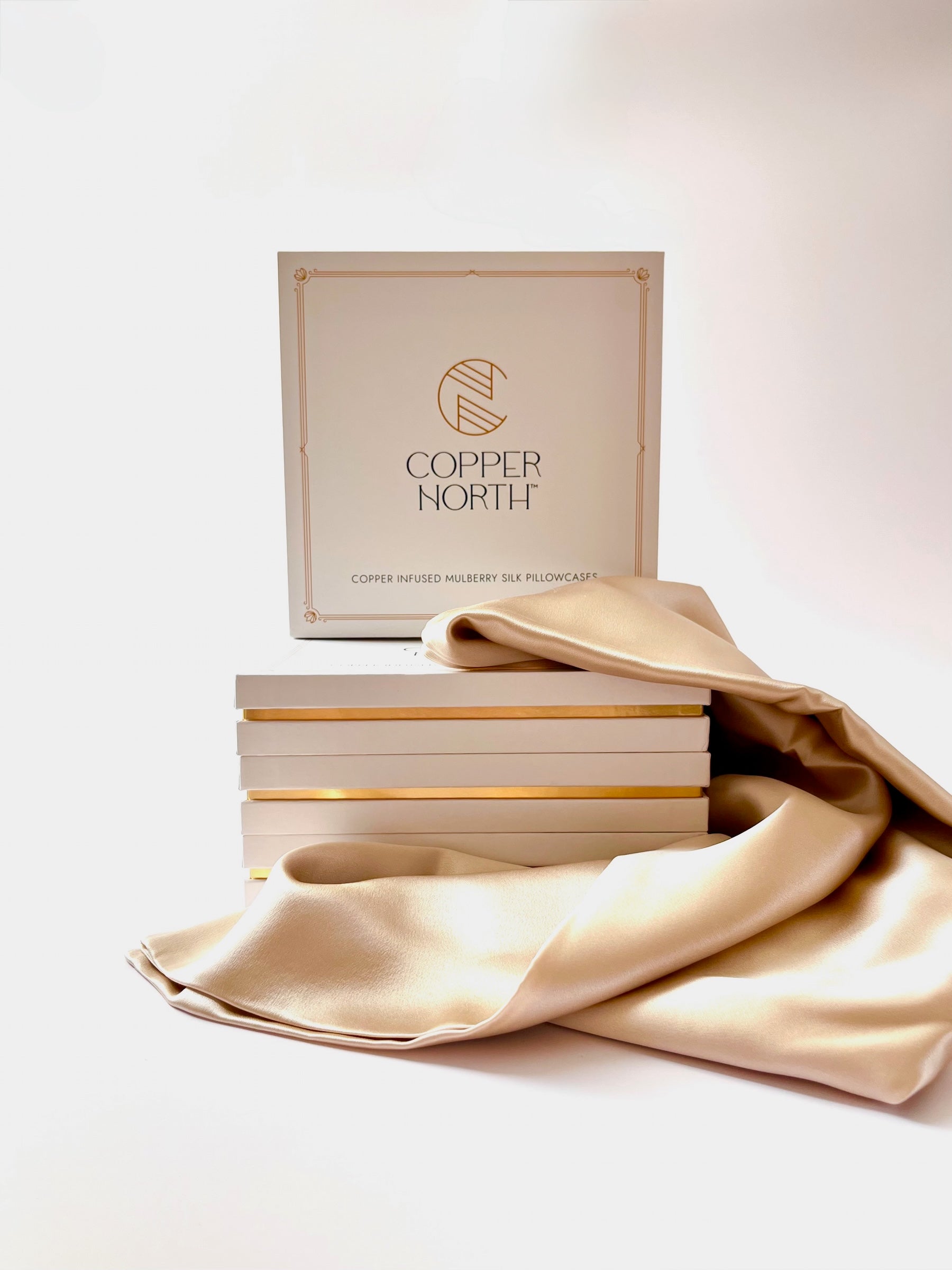
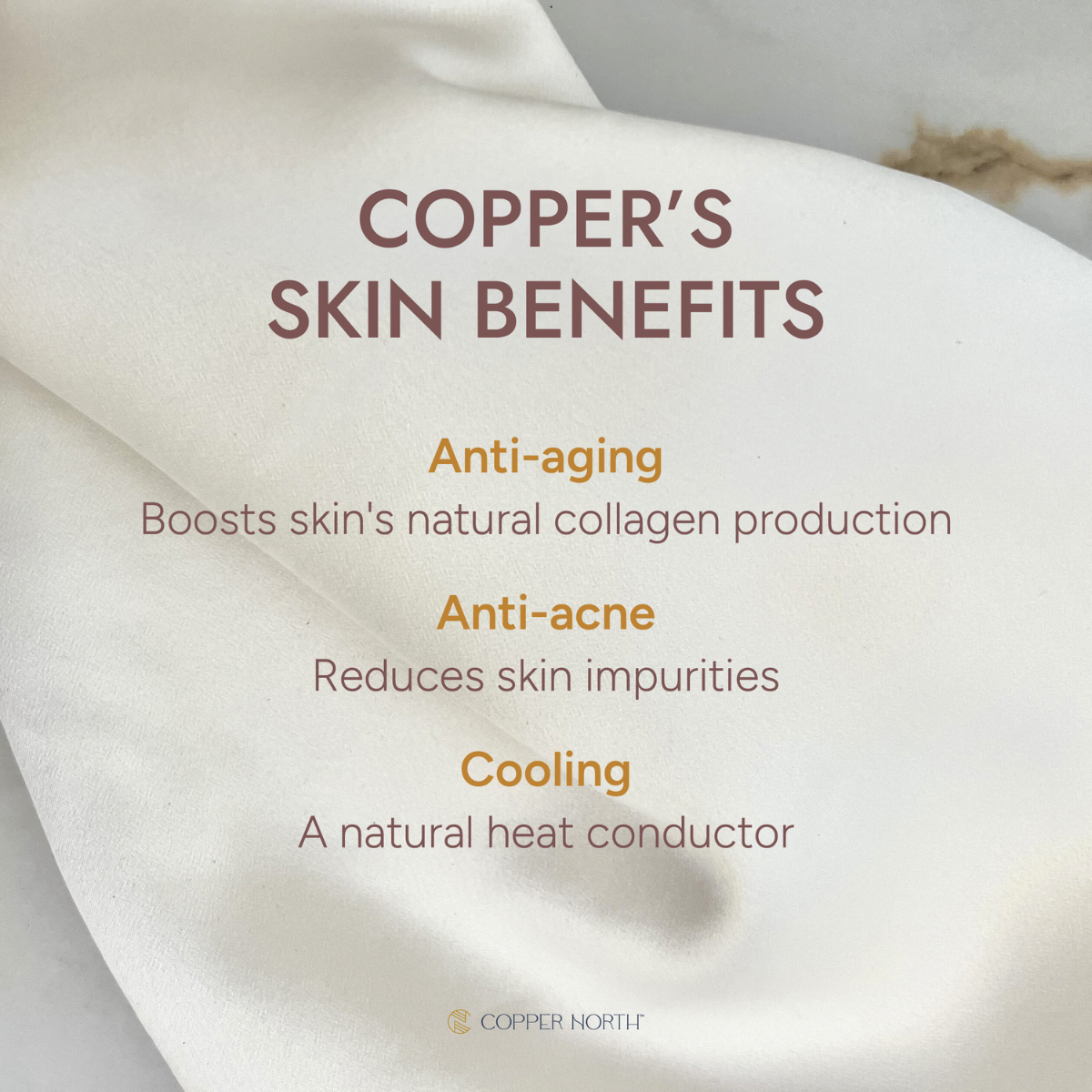
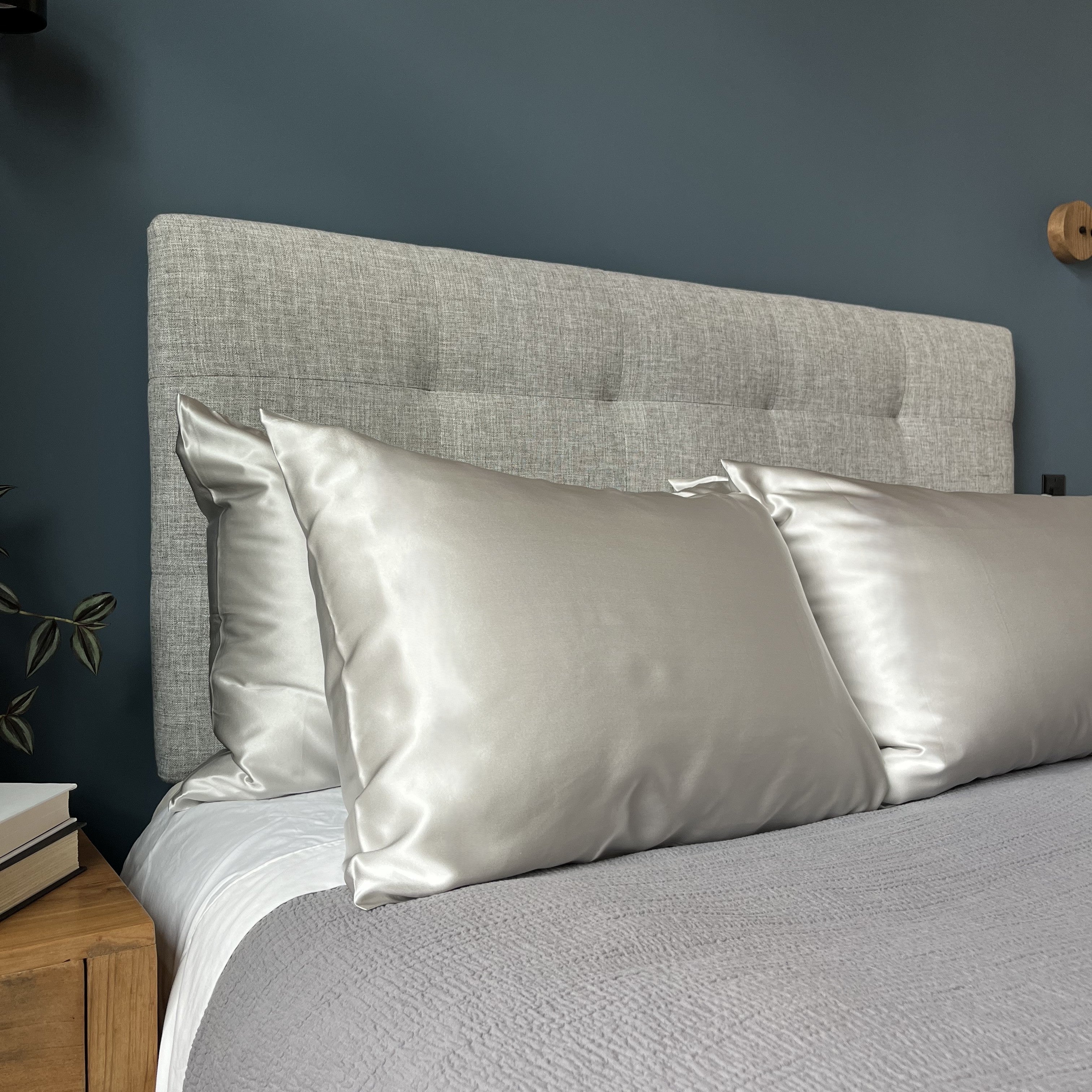
Copper North pillowcases are 100% mulberry silk infused with copper ions, independently verified by European laboratory testing. The silk provides the low-friction, low-absorption surface described throughout this article. Copper is a material with well-documented properties described in medical and textile science: its mechanism of action against a broad spectrum of bacteria, including Cutibacterium acnes, is well-documented in the peer-reviewed literature (21), as is its role in collagen synthesis and skin structure at the biological level (22).
To learn more about copper’s role in skin health and in pillowcases, see our companion articles:
Does a Copper Pillowcase Actually Work? What the Science Says → 6 Scientific Ways Copper Supports Skin Health → Does Copper Help with Acne? What Peer-Reviewed Research Shows
Frequently Asked Questions
What is the best pillowcase for sensitive skin?
The evidence supports 100% mulberry silk as the best pillowcase material for sensitive skin. Silk produces lower friction against skin than cotton (9), absorbs less moisture and skincare products overnight, and does not accumulate bacteria and allergens the way cotton does. For skin that is reactive to friction, environmental irritants, or mechanical stress, reducing the friction and absorption of the sleep surface is a meaningful and low-effort variable to address.
Is a silk pillowcase good for eczema?
Multiple peer-reviewed clinical trials have studied silk fabric in the context of atopic dermatitis and found measurable improvements in skin condition (12,13,14). The CLOTHES Trial, a randomized controlled trial of 300 children with moderate to severe eczema, did not reach statistical significance at its primary endpoint but found consistent positive trends in secondary measures including quality of life (15). The evidence supports silk as a low-risk adjunct to standard eczema management, not a treatment for eczema. A dermatologist should be the primary resource for managing atopic dermatitis.
Does a silk pillowcase help with acne?
The mechanistic case is strong: silk's lower friction reduces mechanical irritation of existing lesions, and silk's lower absorption means topical treatments are more likely to stay on skin rather than migrating into the fabric overnight (9,10). Two clinical trials specifically studying silk pillowcases and acne have been registered but have not yet published full results (18,19). Dermatologists, though, are already recommending silk pillowcases as support for people who are addressing acne (20).
What is the best pillowcase for acne-prone skin?
For acne-prone skin, the priorities are low friction, low absorption, and a cleaner sleep surface. On all three measures, 100% mulberry silk performs better than cotton: lower friction means less mechanical irritation of existing lesions, and lower absorption means the skin's natural oils stay on the skin rather than migrating into the fabric overnight. Furthermore, copper is one of the most studied antimicrobial materials in medical and textile science, with well-documented activity against a broad spectrum of bacteria including Cutibacterium acnes. Copper North pillowcases contain copper, independently verified by European laboratory testing. Neither a silk pillowcase nor a copper-infused silk pillowcase is a treatment for acne though: both are environmental variables worth understanding in the context of what contributes to acne development and persistence.
Is silk hypoallergenic?
Mulberry silk does not harbor dust mites, is free from the rough fiber structures that act as mechanical irritants for reactive skin, and is classified as hypoallergenic in the dermatology literature (14). It is worth noting that silk sericin, a protein component of silk, can occasionally cause allergic reactions in individuals with specific sensitivities, though this is uncommon. High-quality mulberry silk that has been properly processed is considered hypoallergenic for the vast majority of people with sensitive skin.
Is a silk pillowcase better than cotton for eczema?
The clinical evidence comparing silk directly to cotton in atopic dermatitis patients consistently favors silk. In the Ricci et al. 2004 trial, the silk group showed significant SCORAD reduction; the cotton control group showed no improvement over the same period (12). The CLOTHES Trial found that silk garments were worn more consistently at night than during the day, and the nighttime application is most relevant to pillowcase use (15). For eczema-affected facial skin that is in sustained contact with a sleep surface, the evidence supports silk as the more appropriate choice.
What makes a pillowcase "dermatologist recommended" for sensitive skin?
The qualities most relevant to sensitive skin are: low friction (reduces mechanical barrier disruption), low moisture absorption (preserves the skin's natural oil balance and applied skincare), and hypoallergenic fiber properties (reduces exposure to dust mites and mechanical irritants). Mulberry silk meets all three criteria and is the material most consistently referenced in the dermatology literature on fabric and skin. Cotton is the standard recommendation primarily because it is the best available natural fiber alternative to the synthetics and wool that aggravate sensitive skin, not because it is optimal.
Does polyester satin work as well as silk for sensitive skin?
Polyester satin (most satin is made from polyester) reduces friction compared to standard cotton; the smooth weave finish lowers the friction coefficient regardless of the underlying material. However, polyester does not share the breathability or moisture management properties of natural silk, and its thermal properties are less favorable for skin that is heat-sensitive or reactive overnight (11). For sensitive skin applications, 100% mulberry silk is the more appropriate choice than polyester satin.
Explore more of The Art and The Science
About copper:
- Does a Copper Pillowcase Actually Work? Here's What the Science Says
- How Copper Infusion Works: The Process Behind Copper-Infused Silk
- 6 Scientific Ways Copper Supports Skin Health
About bedding and sleep:
- Beauty Sleep Is Real: 5 Science-Backed Things Our Skin Does While You Sleep
- Silk vs. Cotton Bedding: Which Is Better for Skin, Hair, and Sleep?
- Silk Pillowcase for Curly, Natural, and Textured Hair: What Helps Overnight
- When To Replace A Silk Pillowcase
References
- Baker P, et al. (2023). “Skin barrier function: the interplay of physical, chemical, and immunologic properties.” Cells. 12(23):2745. Link
- Chiaverini C, et al. (2024). “Systematic characterization of the barrier function of diverse ex vivo models of damaged human skin”. Frontiers in Medicine. 11:1481645. Link
- Obendorf SK, Klemash NA. (1982). “Electron microscopical analysis of oily soil penetration into cotton and polyester/cotton fabrics.” Textile Research Journal. 52(7):434–442. Link
- Matusiak M, Kamińska D. (2022). “Liquid moisture transport in cotton woven fabrics with different weft yarns.” Materials (Basel). 15(18):6489. doi:10.3390/ma15186489. Link
- Obendorf SK, Namasté YMN, Durnam DJ. (1983). “A microscopical study of residual oily soil distribution on fabrics of varying fiber content”. Textile Research Journal. 53(6):375–383. Link
- Harding CR. (2004). “The stratum corneum: structure and function in health and disease.” Dermatologic Therapy. 17(Suppl 1):6–15. Link
- Amerisleep. “Bacteria in your bed.” Amerisleep Blog. Accessed May 2026. Link
- Borrel V, et al. (2019). “Adaptation of acneic and non-acneic strains of Cutibacterium acnes to sebum-like environment.” MicrobiologyOpen. 8(6):e841. Link
- TRI Princeton. “Everyone is talking about: Silk pillowcases.” TRI Academy. Accessed Jan 2026. Link
- Kosaka M. (1997). “Analysis of sweat evaporation from clothing materials by the ventilated sweat capsule method.” European Journal of Applied Physiology and Occupational Physiology. 76(1):1–7. Link
- Li X, et al. (2024). “How do sleepwear and bedding fibre types affect sleep quality: a systematic review.” Journal of Sleep Research. 33(1):e14217. Link
- Ricci G, et al. (2004). “Clinical effectiveness of a silk fabric in the treatment of atopic dermatitis”. British Journal of Dermatology. 150(1):127–131. Link
- Senti G, et al. (2006). “Antimicrobial silk clothing in the treatment of atopic dermatitis proves comparable to topical corticosteroid treatment.” Dermatology. 213(3):228–233. Link
- Hung MH, Sartika D, Chang SJ, et al. (2019). “Influence of silk clothing therapy in patients with atopic dermatitis.” Dermatology Reports. 11(2):8176. Link
- Thomas KS, et al. (2017). “Silk garments plus standard care compared with standard care for treating eczema in children: a randomised, controlled, observer-blind, pragmatic trial (CLOTHES Trial).” PLoS Medicine. 14(4):e1002280. Link
- Dréno B, et al. (2018). “Cutibacterium acnes (Propionibacterium acnes) and acne vulgaris: a brief look at the latest updates.” Journal of the European Academy of Dermatology and Venereology. 32(S2):5–14. Link
- Plewig G, Kligman AM. (1975). “Acne mechanica”. Archives of Dermatology (now JAMA Dermatology). 111(4):465–466. Link
- “Efficacy of silk-like bedding fabric pillowcase in the treatment of acne vulgaris.” ClinicalTrials.gov Identifier: NCT00767104. Link
- "Assessment of the effects of silk pillowcases on acne prone skin." ClinicalTrials.gov Identifier: NCT06142487. Link
- Markowitz R, MD. (2021). Quoted in: "The Benefits of Silk Pillowcases: What Dermatologists Think." The Healthy. April 2021. Link
- Gabbay J, et al. (2006). “Copper oxide impregnated textiles with potent biocidal activities.” Journal of Industrial Textiles. 35(4):323–335. Link
- Rucker RB, et al. (1998). “Copper, lysyl oxidase, and extracellular matrix protein cross-linking”. American Journal of Clinical Nutrition. 67(5 Suppl):996S–1002S. Link
Copper North pillowcases are made from 100% mulberry silk infused with copper ions. Nothing in this article constitutes medical or dermatological advice. For skin conditions including eczema, acne, or sensitive skin, please consult a qualified dermatologist.



Share: